Share
How to Choose Waterproof LED Outdoor Strip Lights for Landscape Lighting
Published: Last Updated: Estimated Reading time: 8 minsOutdoor lighting has evolved far beyond simple wall fixtures and floodlights. Today, homeowners, landscape designers, and contractors are using LED outdoor strip lights to create elegant, continuous lighting that enhances both safety and curb appeal.
From illuminating garden paths to highlighting architectural features and stair edges, landscape strip lighting provides a clean, modern appearance while remaining energy-efficient and highly customizable.
However, not every LED strip is designed to survive rain, snow, UV exposure, and changing temperatures. Choosing the wrong product often leads to water damage, discoloration, or early failure.
This guide explains exactly what to look for when choosing waterproof LED strip lights for outdoor landscapes, helping you invest in lighting that performs reliably for years.
Why Waterproof LED Strip Lights Are Ideal for Landscape Lighting
Unlike traditional landscape fixtures that produce isolated pools of light, LED strip lights create smooth, continuous illumination. This makes them perfect for modern outdoor designs where subtle lighting is preferred over harsh brightness.
Popular landscape applications include:
● Garden pathways
● Outdoor stairs
● Deck edges
● Patios
● Retaining walls
● Pergolas
● Driveways
● Pool surroundings
● Flower beds
● Outdoor seating areas
Besides aesthetics, LED outdoor strip lights improve nighttime visibility and reduce trip hazards without overwhelming the surrounding landscape.
Start with the Right Waterproof Rating
The first factor to consider is waterproof performance.
Outdoor environments expose lighting to rain, humidity, dust, mud, irrigation systems, and sometimes standing water. Understanding IP ratings helps ensure you choose the right product.
|
IP Rating |
Protection Level |
Best Applications |
|
IP65 |
Splash resistant |
Covered patios and eaves |
|
IP67 |
Temporary immersion |
Garden paths, decks, stairs |
|
IP68 |
Continuous underwater protection |
Pools, fountains, water features |
For most residential landscaping, IP67 LED outdoor strip lights offer excellent protection against rain and weather.
If the strip will be installed around pools, ponds, fountains, or areas that may remain submerged, choose IP68 products designed specifically for underwater environments.
Consider the Installation Location
Different outdoor areas have different lighting requirements.
Garden Paths
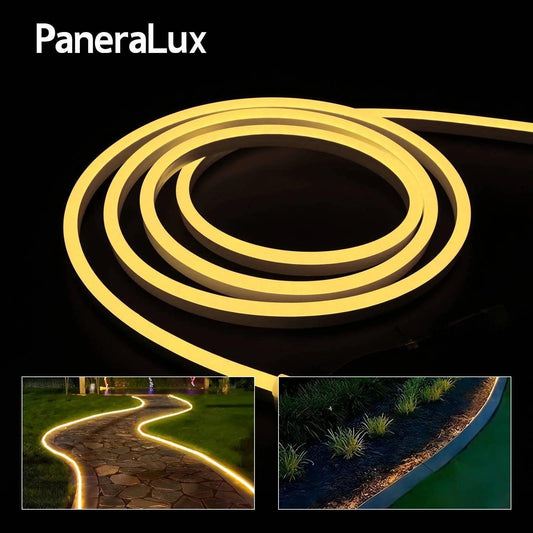
Landscape paths benefit from soft, indirect lighting that defines the walkway without causing glare.
Installing strips beneath edging stones or pathway borders creates an elegant floating effect while improving visibility.
Decks and Patios
Hidden strip lighting under deck railings, benches, or stair noses creates a comfortable outdoor living space.
Warm white lighting is particularly popular for entertaining because it creates a welcoming atmosphere.
Retaining Walls
Installing landscape strip lighting beneath retaining wall caps highlights texture and depth while improving navigation around elevation changes.
This technique is frequently used in modern landscape architecture.
Pergolas and Outdoor Structures
LED strips concealed inside pergolas or gazebos provide ambient illumination without visible fixtures.
Because the light source remains hidden, the overall effect appears clean and sophisticated.
Choose the Right Brightness
More brightness doesn't always create a better landscape.
Outdoor lighting should guide movement and enhance architectural features—not overpower them.
As a general guideline:
● 150–300 lumens/meter — Accent lighting
● 300–600 lumens/meter — Pathways and decorative landscaping
● 600–1000 lumens/meter — Functional outdoor work areas
● 1000+ lumens/meter — Commercial or security lighting
Most residential landscape strip lighting projects perform best in the middle range, providing balanced illumination without excessive glare.
Select the Appropriate Color Temperature
Color temperature significantly affects the appearance of outdoor spaces.
Warm White (2700K–3000K)
Ideal for:
● Gardens
● Patios
● Outdoor dining
● Residential landscapes
Produces a relaxing, inviting atmosphere.
Neutral White (4000K)
Suitable for:
● Walkways
● Driveways
● Modern homes
Provides excellent visibility while maintaining a natural appearance.
Cool White (5000K–6500K)
Best for:
● Security lighting
● Commercial buildings
● Utility areas
Offers maximum brightness but may feel too harsh for decorative landscaping.
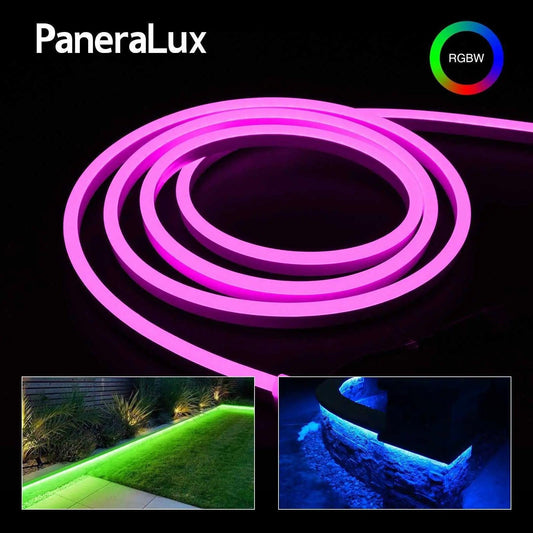
RGB and RGBW
If flexibility is important, RGB or RGBW strips allow you to change colors for:
● Holiday decorations
● Outdoor parties
● Seasonal themes
● Landscape accents
RGBW systems also provide high-quality white light for everyday use.
Low Voltage Is Safer Outdoors
Outdoor lighting systems generally use one of three voltages:
● 12V
● 24V
● 120V
For most landscape projects, 24V low-voltage LED strip lights offer the best balance of safety and performance.
Benefits include:
● Lower electrical risk
● Longer continuous runs
● Less voltage drop
● Greater energy efficiency
● Easier installation
Professional landscape lighting designers often recommend low-voltage systems for residential applications because they simplify installation while improving long-term reliability.
Don't Overlook UV Resistance
Waterproofing protects against moisture, but sunlight presents another challenge.
Constant UV exposure can cause low-quality silicone coatings to:
● Turn yellow
● Crack
● Become brittle
● Reduce light output
Look for outdoor-rated strips manufactured with UV-resistant materials specifically designed for prolonged sun exposure.
This is especially important in regions with intense summer sunlight.
Choose Durable Housing Materials
The quality of the outer housing often determines how long the strip lasts outdoors.
Premium products typically feature:
● High-grade silicone encapsulation
● UV-resistant materials
● Corrosion-resistant components
● Durable PCB construction
● Strong adhesive backing designed for outdoor temperatures
If the strip will be installed in exposed locations, consider pairing it with an aluminum channel.
Aluminum profiles offer several advantages:
● Better heat dissipation
● Improved mechanical protection
● Straighter installation
● Cleaner appearance
● Extended product lifespan
Why LED Outdoor Step Lights Are Becoming More Popular
One of the fastest-growing applications for strip lighting is stair illumination.
Traditional stair fixtures create individual bright spots, while LED outdoor step lights installed as continuous strips produce even lighting across every step.
Common installation locations include:
● Under stair nosing
● Side walls
● Handrails
● Deck stairs
● Stone landscape steps
● Garden staircases
Besides creating a premium appearance, continuous lighting makes each step easier to identify after dark, improving safety for family members and guests.
For outdoor stairs exposed to weather, IP67 or higher waterproof protection is strongly recommended.
Smart Control Adds More Flexibility
Many modern outdoor lighting systems support smart controls, allowing homeowners to automate their landscape lighting.
Popular control options include:
● Mobile app control
● Wi-Fi
● Zigbee
● RF remote
● Timers
● Sunset-to-sunrise scheduling
● Voice assistants
● Scene presets
Smart controls reduce energy consumption while ensuring your landscape lighting operates only when needed.
Common Mistakes to Avoid
Choosing the wrong strip light can shorten its lifespan and increase maintenance costs.
Avoid these common mistakes:
Choosing Indoor LED Strips
Indoor strips lack adequate waterproof protection and will fail quickly outdoors.
Ignoring Voltage Drop
Long installations require proper power planning to maintain consistent brightness.
Using Weak Adhesive Alone
Outdoor installations should include mounting clips, aluminum channels, or mechanical fasteners in addition to adhesive.
Buying Based Only on Price
Low-cost products often sacrifice waterproofing, UV resistance, and LED quality, leading to premature replacement.
Forgetting Future Maintenance
Install strips where connectors and power supplies remain accessible for inspection or replacement if needed.
Final Thoughts
Choosing the right LED outdoor strip lights involves much more than selecting a waterproof rating. A successful landscape lighting system combines proper IP protection, low-voltage safety, durable construction, UV resistance, appropriate brightness, and thoughtful installation.
Whether you're designing elegant landscape strip lighting for a garden path, enhancing a backyard patio, or installing LED outdoor step lights to improve nighttime safety, investing in high-quality outdoor-rated products will provide better performance, lower maintenance, and a longer service life.
With careful planning and the right materials, waterproof LED strip lights can transform any outdoor space into a safer, more inviting, and visually impressive landscape that looks beautiful every night of the year.
Frequently Asked Questions
Can waterproof LED strip lights stay outside all year?
Yes. High-quality IP67 and IP68 LED strip lights are designed to withstand rain, snow, humidity, and changing temperatures. Choosing products with UV-resistant materials further improves long-term durability.
What is the best waterproof rating for landscape lighting?
For most landscape applications, IP67 provides excellent weather protection. If the strip will be installed in pools, fountains, or other submerged areas, IP68 is the better choice.
Are 24V LED strip lights better than 12V for outdoor use?
For longer installations, 24V systems generally perform better because they experience less voltage drop and provide more consistent brightness. They are a popular choice for residential landscape lighting.
Where should LED outdoor step lights be installed?
They are commonly installed beneath stair nosing, along side walls, under handrails, or within aluminum channels to create even illumination and improve nighttime safety.
Can landscape strip lighting be controlled with a smartphone?
Yes. Many modern outdoor LED strip lighting systems support Wi-Fi, Zigbee, or Bluetooth controllers, allowing users to adjust brightness, colors, schedules, and lighting scenes through a mobile app.