Outdoor LED Strip Lights: How to Choose Waterproof Strip Lighting for Outdoor Spaces
Published: Last Updated: Estimated Reading time: 7 minsOutdoor LED strip lights are a flexible way to add lighting to patios, gardens, decks, stairs, fences, and other exterior spaces. Unlike traditional outdoor fixtures, LED strips can follow edges, corners, and architectural lines, making them useful for both decorative and functional lighting.
However, not every LED strip is suitable for outdoor use. Rain, moisture, dust, temperature changes, and direct sunlight can affect performance. Choosing the right outdoor LED strip means considering waterproof protection, brightness, voltage, color, and installation conditions.
This guide explains how to choose outdoor strip lighting and where it can be used.
What Are Outdoor LED Strip Lights?
Outdoor LED strip lights are flexible linear lights designed for exterior environments. They are commonly used to provide accent lighting, pathway lighting, or decorative illumination.
Compared with standard indoor LED strips, outdoor models usually have additional protection against water and dust. Depending on the product, this may include a silicone coating, sealed housing, or waterproof connectors.

Flexible Lighting for Exterior Spaces
One advantage of an outdoor LED strip is its flexibility. It can be installed along straight edges, curved surfaces, steps, railings, and landscape features.
This makes exterior strip lighting suitable for areas where traditional fixtures may be too large or difficult to position.
Decorative and Functional Lighting
LED outdoor lights can serve different purposes. Soft lighting can create atmosphere around a patio or garden, while brighter strips can improve visibility along stairs and pathways.
The right option depends on whether the lighting is mainly decorative, functional, or a combination of both.
Where Can You Use Outdoor Strip Lighting?
Outdoor LED strip lights can be installed in many areas, provided the product has the appropriate protection for the environment.
Patio and Garden
An outdoor LED strip can be installed under seating, along patio edges, or around pergolas to create indirect lighting.
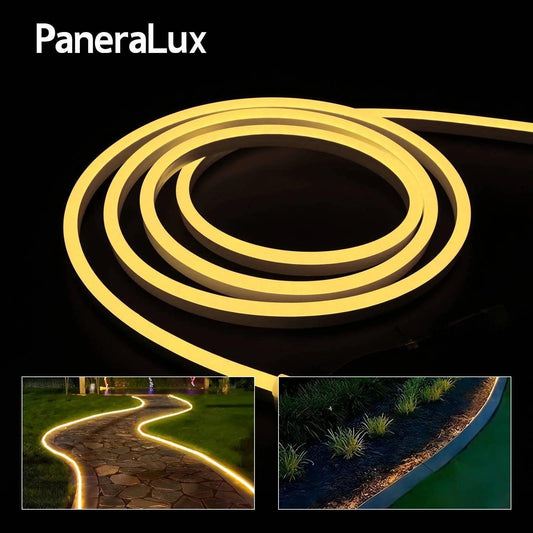
In gardens, strips can highlight borders, retaining walls, pathways, and landscape features without using large or highly visible fixtures.
Deck and Fence
Exterior strip lighting works well under deck railings or along deck edges. It can help define the structure after dark and improve visibility.
LED strips can also be installed along fences to create background lighting and highlight the boundaries of an outdoor space.
Stairs and Driveways
Stairs need sufficient lighting to improve safety and visibility. LED strips can be installed along step edges, beneath handrails, or under each step.
For driveways and pathways, an exterior strip light can help define edges. However, the installation should be protected from water and physical damage.
Pool Areas
Outdoor strip lighting can also be used around pool decks and surrounding landscape areas. Because these locations may be exposed to splashing water, humidity, and pool chemicals, it is important to choose lighting designed for the specific environment.

What Waterproof Rating Do You Need for Outdoor LED Strip Lights?
The required waterproof rating depends on where the lights will be installed.
IP65 for Covered or Protected Areas
IP65 LED strips are protected against dust and water jets. They can be suitable for covered patios, pergolas, and other locations with limited water exposure.
IP67 for Exposed Outdoor Locations
IP67 offers greater water protection and may be suitable for areas regularly exposed to rain and outdoor moisture.
It can be a better choice for decks, fences, garden borders, and other exposed installations.
IP68 for High Water Exposure
IP68 provides a higher level of water protection and may be required for demanding environments.
However, an IP rating alone is not enough for every application. If the strip will be installed in a pool, fountain, or chemically treated environment, check whether the product is specifically designed for that use.
How to Choose Outdoor LED Strip Lights
When choosing outdoor strip lighting, waterproof protection should be considered together with several other factors.
Match the Strip to the Installation Location
A covered patio and an exposed garden pathway do not require the same level of protection.
Before choosing a product, consider how much rain, moisture, dust, sunlight, and physical contact the strip may experience.
Choose the Right Brightness
Brightness should match the purpose of the lighting.
For decorative lighting, softer illumination may be enough. Stairs, pathways, and areas requiring greater visibility may need brighter LED strips.
Using extremely bright lighting everywhere can create glare and reduce the overall atmosphere.
Consider Voltage and Power
Low-voltage LED systems are commonly used for outdoor applications. Make sure the power supply, controller, cables, and connectors are also suitable for the installation environment.
A waterproof LED strip alone does not make the entire lighting system waterproof.
Select the Right Color
Single-color white strips are suitable for everyday outdoor lighting.
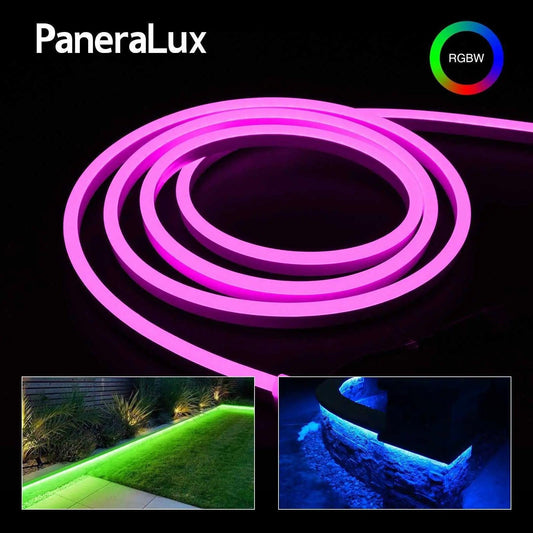
RGB or RGBW options provide greater flexibility for decorative spaces, allowing users to change colors for different occasions.

Outdoor LED Strip Lighting Ideas
Outdoor LED strip lights can create a modern effect without requiring visible light fixtures.
Create Indirect Lighting
Install the strip beneath benches, deck edges, handrails, or other architectural features.
This hides the light source and creates a softer glow while reducing glare.
Highlight Landscape Features
Use outdoor strip lighting to emphasize pathways, garden borders, walls, fences, and stairs.
Linear lighting can help define the shape of a space and make important features easier to see after dark.
Use Layered Lighting
Instead of depending on one bright source, combine different types of outdoor lighting.
For example, use brighter lighting for stairs and pathways, then add softer LED strip lights around seating areas or landscape features.
Common Installation Mistakes
Even high-quality outdoor LED strip lights can have problems if they are installed incorrectly.
Choosing an Inadequate Waterproof Rating
Do not use an indoor LED strip in an exposed outdoor location.
Always choose a product with protection appropriate for the amount of water and moisture it may encounter.
Ignoring Other Electrical Components
The LED strip is only one part of the system.
Power supplies, controllers, connectors, and cable connections should also be protected from water and moisture.
Relying Only on Adhesive
Outdoor temperatures and moisture can weaken adhesive over time.
For long-term installations, consider using mounting channels, clips, or other suitable fixing methods.
Making Future Maintenance Difficult
Controllers and power supplies may eventually need inspection or replacement.
Plan the installation so important components remain accessible.
FAQ
Are outdoor LED strip lights waterproof?
Some are, but the level of protection varies. Check the IP rating and choose a product that matches the installation environment.
What IP rating is best for outdoor LED strip lights?
IP65 may work for protected outdoor areas, while IP67 or IP68 may be needed for locations with greater water exposure.
Can I install LED strip lights around a pool?
Yes, but you should choose products designed for wet environments and ensure the complete electrical system is suitable for the location.
How do I make outdoor LED strip lights last longer?
Choose the correct waterproof rating, protect connectors and power supplies, use secure mounting methods, and avoid installing products in environments they were not designed to handle.
Conclusion
Choosing the right outdoor LED strip lights depends on where and how they will be used. Waterproof protection, brightness, voltage, color options, and installation methods should all match the environment.
Whether you are lighting a patio, garden, deck, fence, stairs, driveway, or pool area, properly selected outdoor strip lighting can improve visibility while adding a clean and modern design element to your exterior space.